

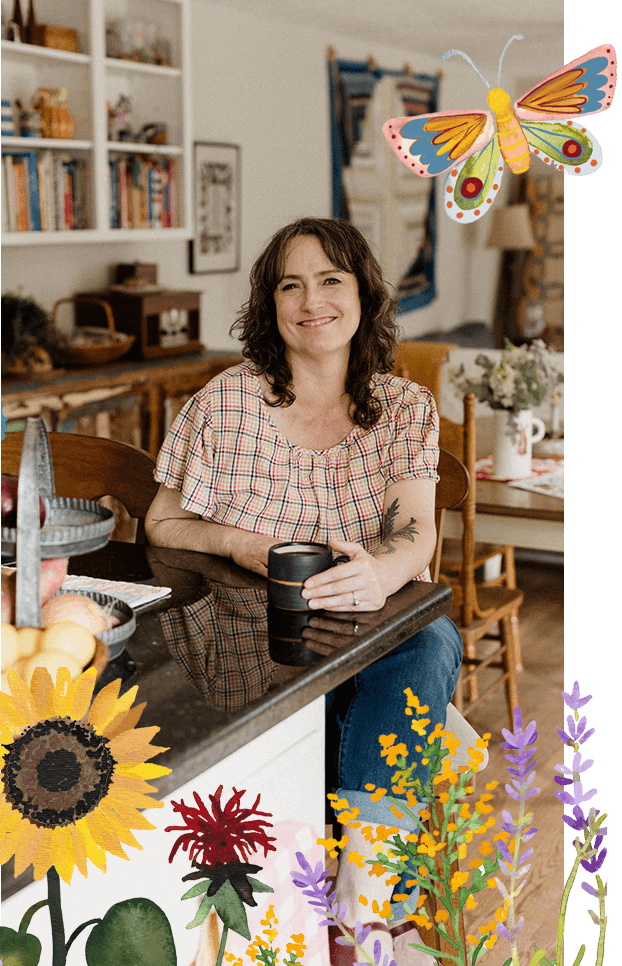

Reclaiming My Lost Attention Span
As you know, I've been thinking a lot about my attention span lately and specifcally my inability to read and stay focused for any stretch of time anymore.
As a kid, I loved reading with an intensity that amazes me as an adult. I loved the Little House on the Prairie books, Willy Wonka's Chocolate Factory, A Wrinkle In Time. (In the 80s I read them without the historical and cultural context we now have.) My memory of reading as a child felt..... incandescent, all-consuming— that feeling of pleasure. The way I lost track of time. The way certain passages burrowed into my memory,
I miss that feeling so much. And it's sad that I can't imagine reading for hours anymore.

Fast forward to college in the ’90s, and I still remember the books that seemed to crack my brain open and change the way I saw the world—A People’s History of the United States by Howard Zinn, The House on Mango Street by Sandra Cisneros, The Beauty Myth by Naomi Wolf. These were required readings, but they were also the kind of deep, pleasure-driven reading that makes you want to linger on every page. (Believe me, I also had plenty of non-pleasure-driven reading at the time—thank you, ECON 101.)
Lately, I’ve been seeing a lot of headlines about the decline of reading in the U.S.: fewer than half of American adults report having read even one book for pleasure in the past year, and only a small fraction of young teens read for fun regularly—a steep drop from a decade ago. (National Endowment for the Arts; The Atlantic.)
It makes me wonder and worry (because if I'm wondering I'm usually worrying too lol) am I losing my ability to engage critically with an idea for more than a few minutes. How are we supposed to cultivate any real depth of thought or grasp nuance if reading is increasingly rare?

Reading As Ritual
So I'm on a quest to honor the 12 year-old bookworm I used to be by developing an improved (and more fun!) reading practice as a grown up.
And considering the way I read these days:
- binge-watch three episodes of Severance or Pluribus
- then read 1.5 pages per night before falling asleep
This practice is not going to help me finish my TBR lol.

I saw a recent post by Sadie Hartmann @mother.horror on reading as ritual and it really appealed to my 12 year-old bookworm brain! Part of this project is about slowing down, it's about embodiment, really experiencing things deeply again, so her list of practices really inspired me. (You can read her full list on her instagram post)
1. Bookish Grimoire
A grimoire is a book of magic, where a witch chronicles spells, rituals, recipes, incantations, and it's a record of craft and knowledge accumulated in one place.
A bookish grimoire is a place to, as you read a book, to keep a record of favorite quotes, thoughts, theories, and notes. Then when finished with the book you can keep these notes (include in your analog binder?) or use them to craft a more detailed book review.
2. Craft The Experience (These will be activities in future workbooks)
These are all crafty bookish things you can do to enhance your reading practice
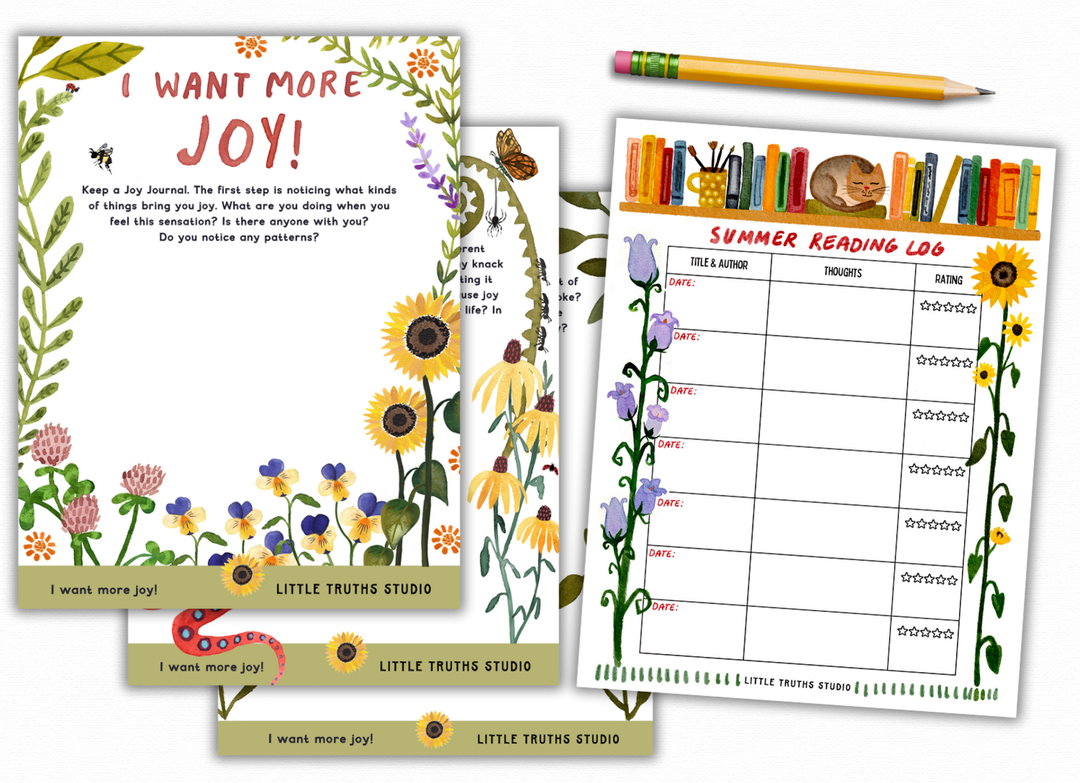
Keep a review log (in your workbook or make your own)
Annotate your books or practice marginalia
Illustrate your own book covers/ dust jackets, maybe write your review on the book cover (and remember to date it, for posterity!)
Make your own bookmarks, maybe write your review on the bookmark (and remember to date it, for posterity!)
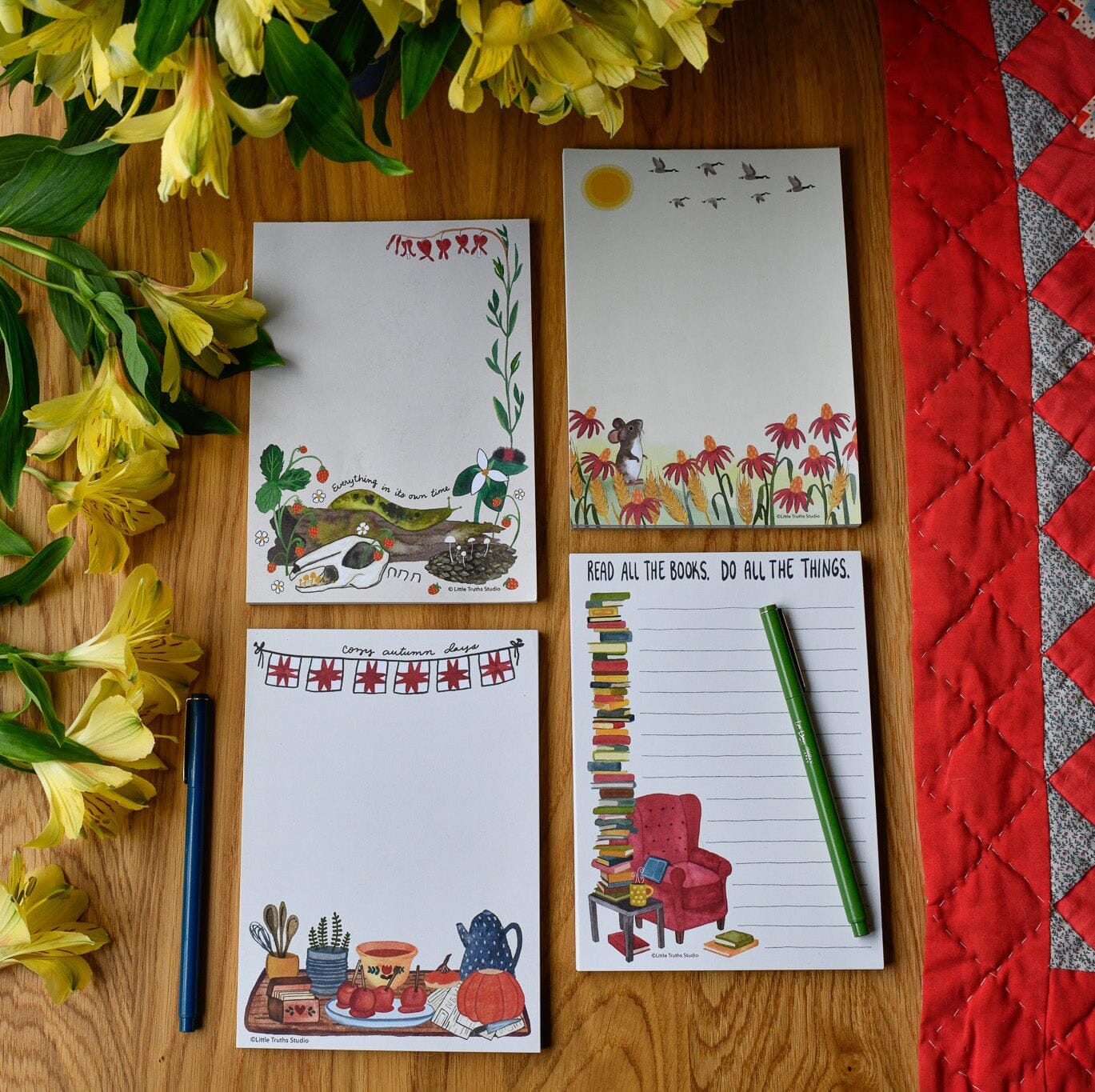
Buy some cute pens, highlighters, stickers, tabs
3. Practice Marginalia
Marginalia are marks made in the margins of a book. They might be doodles, comments, glosses (annotations), critiques, drolleries, or other illuminations. We're conditioned to think doodling in our books is a bad thing bit it's an ancient practice.
If you're still a bit squeamish about writing in your books, I used to write notes on slips of paper and tuck them inside.
Either way it's treat to find these notes inside a book after all these years!

4. Immersive Reading
This is the practice of listening to the audiobook while reading a physical copy of the book, at the same time. And if you keep notes at the same time, you're really reading at another level!
I personally have never done this but I'm totally intrigued. Has anyone tried this?
5. Seasonal Reading
WINTER: Wintering by Katherine May, Winter Morning by James Crews (so good!), The Snow Child by Eowyn Ivey, The Christmas Chronicles by Nigel Slater. What are your favorite winter reads?
Five Winter Reads by Laura Bray at The Cozy Library
SPRING: Honestly I can't think of many spring themed reads! Spring by Mary Oliver, (Mary Oliver is appropriate for any season!) Anything by Sarah Addison Allen? What are your favorite spring reads?
SUMMER: Secret Life of Bees, The Body by Stephen King (My favorite short story/novella, turned into the movie Stand By Me is included in the very relevant-to-this-topic collection of stories called Different Seasons) What are your favorite summer reads?
AUTUMN: Something Wicked This Way Comes by Ray Bradbury, Wuthering Heights by Emily Brontë, Anything by Edgar Alan Poe or Stephen King. What are your favorite Autumn reads?

Striving for this kind of reading practice in a screen-saturated age requires some changes but not heroic ones. For me I need to set clear boundaries: reading with the phone in another room and turning off notifications during set periods because my attention is fleeting and I have the urge to reach for my phone!
Setting the scene like this also helps me to recalibrate expectations shaped by screens—accepting that deep reading initially feels slower, harder, even uncomfortable. But I feel like that discomfort is evidence that my attention is being rebuilt!
I don't know, maybe this a bit lofty, but I think that by creating this kind of deliberate practice, reading becomes an intentional counterpractice to the fragmentation. By restoring my capacity for sustained thought I'm resisting a culture designed to erode it.

What books have shaped you, have stuck in your memory? Why?
What do you think of developing a practice that anchors your reading?
What are you reading?
And Just A Reminder:
This homepage is where all of the blog posts and printable workbooks for The Analog Life Project will live in one place.
The community on Substack is where we will be able to talk about it.


The Analog Life Project is a year-long project with monthly content and is completely free.
That being said, I would love it if you would consider supporting this project and my work by visiting my shop.
Are you outside the US? My international shipping is limited but Buy Olympia sells all of our products (washi tape is on the way!) and ships worldwide!
Not ready to shop? You can Buy Me A Coffee.